
Eging Rods
Products found: 59 · page 1 of 2
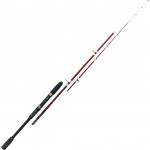
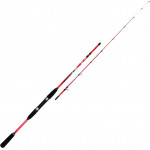
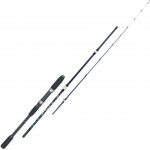
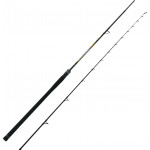
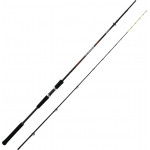
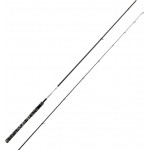
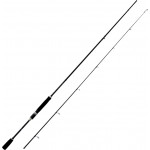
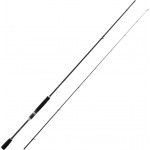
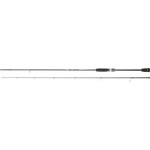
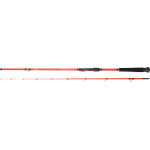
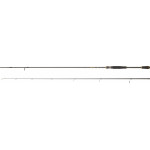
Eging is a technique built around a squid jig, and the rod is built to give that jig its characteristic snap. This is a narrow shelf, so length, casting weight and rod weight sit close together across the models. The most common length sits just above the median, and the most common casting range suits light to mid-weight squid jigs. Nearly every model on this shelf with section data recorded is two-piece and only a few are three-piece, while no one-piece or telescopic eging rod appears.
Jig weight and casting range
Behind the most common casting range, two nearby ranges follow closely, one with the same upper limit and one reaching a little higher. As the jig gets heavier and needs to reach deeper into current, the higher range suits better. Power is also tightly clustered, medium light, medium and medium heavy account for most of the shelf. Action splits mainly between medium and fast, with medium the larger group. A medium action rod softens the jig's snap along the bottom, a fast action rod gives a sharper snap, useful where current runs hard.
The eging shelf leans toward Daiwa
Daiwa accounts for most of the models here, with Yuki second and Shimano a distant third. Across the rod range as a whole Shimano has the most models, so this shelf turns that pattern on its head. Keeping the brand filter open keeps the list usable, narrowing down to a single manufacturer can leave very few rows. Length should also stay broad in the filter, the whole shelf sits within a fairly tight band.
The reel to match a squid jig set-up is a mid-size spinning reel with a modest minimum drag rating, and spinning reels are wide in that band. If the exact figures needed are not on this shelf, light models with a similar casting range within spinning rods can also be used. Pairing a rod and reel from both shelves comes down to keeping the reel's minimum drag in step with the jig weight the rod is rated to cast.